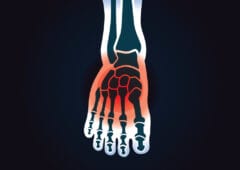
 The foot is a sophisticated biomechanical construction that has to perform a great deal of movement. Since it is such a sophisticated construction, there are lots which can go wrong with it. There are several dysfunctional deviations possible in the feet which may impact the normal function and trigger pain. Podiatrists typically use foot orthoses, footwear adjustments and exercises to handle these types of issues. There are many deformities of the forefoot that will have to be accommodated in foot orthotics. That is according to the theory of the foot alignment that for the foot to be normal that a plantar plane imagined beneath the front foot has to be perpendicular to a line of the back of the heel bone. There are plenty of deviations that the forefoot may have when compared with what is the deemed normal. The medial side of the forefoot might be lower leading to what gets termed as a forefoot valgus. This forefoot valgus may be the whole forefoot is everted or it might just be the medial aspect of the forefoot being plantarflexed. This type of foot can result in considerable effects on how the foot moves. Precisely what those issues are is […] read more
Curation of Knowledge
Curated database of articles
Last Updated:
September 11, 2026
Click here to submit your article
The difference between forefoot varus and forefoot supinatus
The foot is a sophisticated biomechanical construction that has to perform a great deal of movement. Since it is such a sophisticated construction, there are lots which can go wrong with it. There are several dysfunctional deviations possible in the feet which may impact the normal function and trigger pain. Podiatrists typically use foot orthoses, footwear adjustments and exercises to handle these types of issues. There are many deformities of the forefoot that will have to be accommodated in foot orthotics. That is according to the theory of the foot alignment that for the foot to be normal that a plantar plane imagined beneath the front foot has to be perpendicular to a line of the back of the heel bone. There are plenty of deviations that the forefoot may have when compared with what is the deemed normal. The medial side of the forefoot might be lower leading to what gets termed as a forefoot valgus. This forefoot valgus may be the whole forefoot is everted or it might just be the medial aspect of the forefoot being plantarflexed. This type of foot can result in considerable effects on how the foot moves. Precisely what those issues are is […] read more
Views : 826
How do Podiatrists Treat Ingrown Toenails
 Ingrown toe nails are a common problem that may be rather painful plus they don’t get better without treatment. Ingrown toenails are usually amongst the most prevalent issues dealt with by podiatrists. The primary cause of an ingrown nail is usually a combination of a rounded nail and a inadequate toenail cutting technique. The management of the ingrown toe nail is dependent upon if it’s infected or otherwise. When it is, the podiatrist might organise antibiotics. Although this can help the infection, it won’t deal with the problem because the bit of ingrown toe nail which is causing the issue is still present. A skilled Podiatrist can readily get rid of the corner or spike on the edge of the toe nail which has broken the skin that is creating the issue. They often do this with rather little discomfort. Unless this problem bit of toe nail this really is creating the ingrown nail is taken away, the infection may well remain and the issue is still growing in. After this, suitable wound care and also the use of bandages is needed to help get the infection treated properly. Should the pain lasts following this initial treatment method, this might […] read more
Views : 708
What was Chinese Foot Binding?
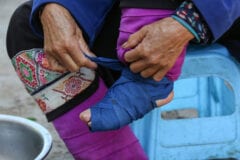 The Lotus footwear is one of the oldest styles of footwear recorded that were specifically designed for females use. Now, the manufacturing of this footwear nowadays is virtually not happening and the few lotus footwear still existing have become maintained in museums or personal collections a lot like antiques and artifacts. Whilst the footwear were manufactured for females of all ages, any single woman today who is older than the age of 10 would probably find it not possible to use this footwear. This is because this kind of footwear had came from traditional China and was made for females back when foot binding was still used. For the people unaware of the process, foot binding actually means the tight binding of the foot using wraps. The significance of this practice is such that it’s practiced by girls between the ages of two and five. The procedure for foot binding would certainly almost definitely be seen as being a brutal act of pride simply because it required the act of intentionally breaking the arch and toes of each foot before being wrapped up. On top of that, this procedure was performed with no form of pain relief. The aim of […] read more
Views : 1271
What is a Functional Hallux Limitus?
 The great toe joint in the foot is a crucial joint for normal function and running or walking. As we are running or walking and the feet are flat on the floor, that big toe joint would need to bend when the heel come up off the surface. If this great toe joint doesn’t bend then running or walking will probably be much more difficult. More energy becomes necessary so running or walking gets very exhausting. When the movement that is not able to take place at the big toe joint still has got to happen, other joints could be required to move a lot more at a time that they’re not meant to be moving. This unnatural movement can become an issue. There are actually a variety of things that might go wrong with that big toe joint and obstruct this normal function. One of the most prevalent issues is a problem that often will get called hallux rigidus and as its name indicates, the hallux joint is rigid and will not move. The most frequent reason for this is osteoarthritis of that great toe joint. This is often quite painful and the inflexible hallux joint tends to make […] read more
Views : 669
How to make use of podiatry felt for foot problems
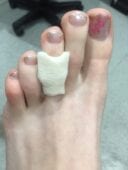 Podiatry (or which used to be named ‘chiropody’) felt is a regularly used padding material to treat a variety of difficulties in the feet. The podiatry felt is a natural material which is semi-compressed into the padding having a adhesive layer. The felt padding is supplied in flat sheets which could be then be trimmed to any shape using scissors or it’s available in many different designs as pre-cut pads for different types of foot conditions and several locations on the foot. The protective sheet over the adhesive padding is taken away and the felt pad is stuck to the foot to protect almost any painful location to give that spot a rest so the symptoms may be relieved and the condition given a chance to heal. For bunions a large pad the same shape as a doughnut may be cut and stuck over the bunion to get footwear force off the painful hallux valgus. When there is a corn on a toe, then the small felt pad might be cut and placed just simply behind the painful corn in order that the footwear pushes on the felt pad rather than on the painful corn. This can decrease the symptoms […] read more
Views : 783
The Richie Brace for an Adult Acquired Flat Foot
 The progressive deteriorating of a flat foot or fallen arch in an adult is commonly known as posterior tibial tendon dysfunction or adult acquired flatfoot and could have serious implications if not noticed early on and taken care of. This is more prevalent in older along with over weight adults. The principal concern is that the posterior tibial muscles which are the reason for supporting the arch of the feet are not very good at carrying out that, and so a ongoing falling of the foot occurs. In addition to a flattening of the arch of the feet there may be commonly increasing pain and discomfort within the arch area of the feet and also the ankle joint. As it gets worse, further walking becomes significantly tougher and it is really tireing. There are generally 4 steps involving posterior tibial tendon dysfunction how the problem continues through with one being the initial phase and four being the final phase that only surgery can deal with. There is certainly a bit of difference of opinion of the staging of this as their is variability amongst health professionals plus some reliability issues. While acknowledging that, stage 1 is frequently managed with foot […] read more
Views : 898
How do diseases get their names?
 There’s been a custom in health to name diseases following the medical professional who initially identified or published on that disorder. In some cases the doctor named the condition after themselves that would be looked at relatively egotistic and other occasions it was provided with a physician’s name by their peers in recognition of the success, which may be looked at an honor. Just lately there has been a tendency away from calling disorders after doctors. Many reasons exist for for this trend. These days research is more likely to be conducted by groups rather than individuals working by themselves, therefore it is tricky to credit an ailment to only one person. Occasionally in the past credit for a disorder went for the wrong physician and the disorder might have been explained by another individual prior to when the one which gets the recognition. An illness which is named after a doctor doesn’t refer to the particular pathology or the underpinning biological mechanisms of the disease process which are generally significantly more helpful. As an example, it’s relatively simple to know what diseases such as acquired immunodeficiency syndrome (or AIDS) as well as whooping cough are simply based on the […] read more
Views : 468
Are there any flips flops with arch support?
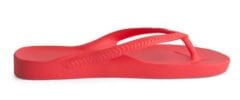 Flat foot is a common problem which is generally not always an issue. It can raise the risk for other conditions occurring and may turn out to be symptomatic on its own. Because of this, flatfoot is commonly treated to help these problems and in many cases to stop disorders from causing issues. The most widespread treatment for flat foot are foot orthoses or insoles. These can be either the mass-produced prefabricated kind which is picked to match the contour and requirements from the foot or they can be of the bespoke type which is created from an impression with the foot and is specific for the specifications of this individual. The science shows that the end result between the customized and pre-made sort of foot orthotics is generally about the same. Having said that, in reality, what’s beneficial to every individual can vary. Frequently the using foot supports may be combined with the use of exercises. There are alternatives and many ask if the mid-foot (arch) support that is built in flip-flops, much like the Archies manufacturer out of Australia could be part of an alternative to foot orthoses. In Australia, they will name flip-flops, the thongs. The Archies […] read more
Views : 969
Foot Problems in Children
 An glaring cliché that children are not just little grown ups. The growing child has growing bones and other body systems that mean that the nature of clinical problems that children have are generally exclusive to children and aren’t like the problems you would most likely expect in a smaller grownup. Because the child is growing, there are particular conditions associated with that. The developing tissues have a propensity to be damaged if they’re subject to injury. The foot is one a part of the body that’s not only developing in the youngster, it is also susceptible to potential injury and also trauma as well as force through the shoes, so there is lot that may go wrong with the feet. On the list of issues for treating foot conditions in youngsters (and a lot of other conditions in kids seen by health care professionals) is figuring out what is abnormal and what’s a part of normal growth. Within podiatry, an illustration of this dilemma is that of flat foot. A flat foot is a part of the normal growth and development of the child therefore it can be difficult to determine when the flat foot is something not necessarily […] read more
Views : 546
What is the Cluffy Wedge used for?
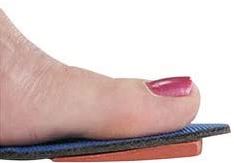 The Cluffy Wedge is a modification to a foot orthotic or a stand alone intervention for different foot problems. The foot is a vital structure for individuals to get about upon. It needs to work correctly for all of us to stand, walk and also run. Any sort of pain or dysfunction with the feet are going to affect the ability of the feet to support us and also to move about on. These types of problems can have consequences that can substantially affect the total well being, particularly mobility. A lack of movement has got implications for overall health and also well-being. Podiatry practitioners have an important role in order to keep the feet strong so that we do not suffer from the consequences of pain with the feet. The foot has got 26 bones along with multiple joints and also ligaments in addition to muscles which controls the motions in the bones and joints. These all really need to function together to allow us to move about without pain. There are plenty of biomechanical dysfunctions that may go wrong and restrict that normal biomechanics. For example, let me go over the big toe joint of your feet: after […] read more
Views : 1267