 Chilblains are skin lesions that come about on the foot that are more common in the chillier climates. Knowing the reason for any disorder goes a long way to help being aware of what is happening with them, ways to avoid chilblains and the way to take care of them. This is definitely true of chilblains. While they only appear in wintry climates, they may not be actually due to the cold. A lot of people who do not have them get cold as well and they usually do not have chilblains. Likewise, some individuals develop chilblains with even small alterations in temperatures and it not too cold. Because of this there is a lot more occurring than just the cold that usually will get blamed for resulting in them. Within the skin there are a lot of small arteries (the microcirculation) that will help regulate temperature in your body. Whenever we become cold, those blood vessels tighten to conserve heat deeper in the body. If we are warm, those arteries open and bring the blood nearer to the surface so that we can dissipate warmth for cooling the body. This is an important normal function. With a chilblain the […] read more
Curation of Knowledge
Curated database of articles
Last Updated:
September 11, 2026
Click here to submit your article
What Causes Chilblains?
Chilblains are skin lesions that come about on the foot that are more common in the chillier climates. Knowing the reason for any disorder goes a long way to help being aware of what is happening with them, ways to avoid chilblains and the way to take care of them. This is definitely true of chilblains. While they only appear in wintry climates, they may not be actually due to the cold. A lot of people who do not have them get cold as well and they usually do not have chilblains. Likewise, some individuals develop chilblains with even small alterations in temperatures and it not too cold. Because of this there is a lot more occurring than just the cold that usually will get blamed for resulting in them. Within the skin there are a lot of small arteries (the microcirculation) that will help regulate temperature in your body. Whenever we become cold, those blood vessels tighten to conserve heat deeper in the body. If we are warm, those arteries open and bring the blood nearer to the surface so that we can dissipate warmth for cooling the body. This is an important normal function. With a chilblain the […] read more
0 Views : 877
How to get rid of bunions?
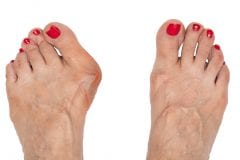 Bunions are a very common problem of the foot. They are an growth of the great toe joint and are generally associated with a hallux valgus which is a deviation of the great toe over towards the smaller toes. Bunions are generally more prevalent in females and are also more common in those who wear tighter fitted shoes. There is also a hereditary component to bunions which appears to increase the risk in many people, but genetic makeup also seems to play a part in reducing the chance in other people. Bunions could become painful inside the joint from arthritis like symptoms as well as from pressure on the enlarged big toe joint from the footwear. Bunions also look ugly. There’s just one method of getting rid of them and that’s having surgery. There is no other options. There aren’t any exercises that will get rid of bunions. There aren’t any natural home remedies that can be used to eliminate bunions. A quick look online with present, practically, thousands of websites all providing information on how to get rid of bunions. None of the touted strategies get the job done and they simply can not get rid of bunions. Every […] read more
0 Views : 1007
Do corns on the feet have roots?
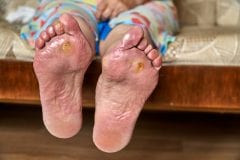 Being a foot doctor this really is one query which I get asked a lot, both clinically and in social occasions. Corns don’t have roots. After a podiatrist removes a corn, they generally do usually tend to return, but not as they have got roots. Corns keep coming back as the reason behind the corn or callus is still there. A corn is an portion of skin, frequently on a toe that becomes thicker and uncomfortable. The cause of that thickened section of skin is just too much force. It is very natural for the skin to get thicker to safeguard itself. Give some thought to what goes on after you chop lots of timber and get a callus on the hands. That is a natural defensive physiological of the epidermis thickening up to protect itself. Once you end chopping wood, the calluses go away completely because the stress that brought about them has vanished. It’s the same process with a corn or callus on the feet. The skin thickens up in reaction to pressure. There are actually a wide range of factors behind this higher force. There may be a bunion or claw toes or a fallen metatarsal bone […] read more
0 Views : 1488
How do podiatrists off-load the diabetic foot?
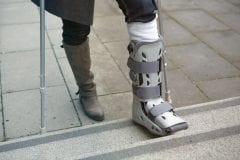 There are many reasons that a podiatrist or any other health care worker might want to offload the feet or an area of the foot. Offloading is the term for getting the weight off the foot. This is often necessary if the increased load or stress is causing the foot issue. This might be as basic as a corn or it could be as critical as an ulcer in a person with diabetes. It could be a bone and joint condition that really needs a short time where there is no force on it that will help it improve. Among the big complications with treating foot problems is the fact that we still need to walk on it so you can get around and carry out our daily activities. If it was, for example, a painful shoulder, it is much easier to cease making use of it. This will make the managing of foot problems more challenging and the need to work with various offloading approaches. There are various different methods to offload the foot. The most widespread and oldest is probably the use of podiatry felt. This is typically self adhesive which is cut to form so it fits […] read more
0 Views : 860
Heel Pain in Children is Most Likely Due to Sever’s Disease
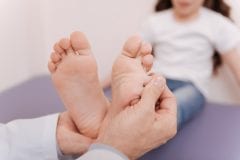 The most prevalent cause of heel pain in adults is a problem known as plantar fasciitis that make up to 90% of the cases. In regards to kids, plantar fasciitis is really rather uncommon and the most frequent explanation for heel pain in kids being a problem referred to as Sever’s Disease. This is really bad words since it’s not a disease and the use of that phrase can certainly have pretty undesirable consequences. There’s also a trend away from the using descriptions of disorders from staying called after individuals, usually the physician which first detailed the ailment. The more suitable term for the problem is actually calcaneal apophysitis. It is a problem with the growing cartilage area at the back of the calcaneus or heel bone. When we come into this world, the majority of the bones will still be a soft and pliable cartilage framework which the bone grows within. For the calcaneus growth begins in the center and extends to take up the full area of that cartilage material scaffold. Nevertheless, there does exist still a cartilage material growth area in the back of the heel bone which growth and development will continue to happen from. That […] read more
0 Views : 908
What are chilblains?
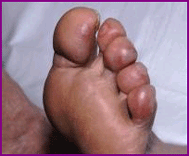 Chilblains are a common condition of the toes within the colder climates. Chilblains are as a consequence of a undesirable response of the tiny arteries to a change in temperatures. Normally when the feet become cool the tiny blood vessels in the skin constrict to maintain the body’s core temperatures at a stable level. Typically, once the foot warms up, these blood vessels expand to provide extra circulation towards the skin to spread the heat. In a chilblain, those tiny arteries stay closed down and don’t open right away. This results in waste elements accumulation in the skin which in turn result in the release of inflammatory chemicals. In due course the arteries do open, resulting in an inflamation related effect. The reason behind this issue with the way the blood vessels react to the alteration in temperature is not known. They just simply appear to occur in some people and not in others. Chilblains are generally more prevalent in females revealing that there will be a hormonal element to them. They do, nevertheless, happen in men, but simply less often. They aren’t associated with poor blood circulation because both those with great and inadequate blood flow get them. They […] read more
0 Views : 749
What exercises can you do to help bunions?
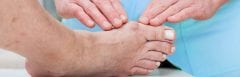 Bunions are a very common condition of the feet that might be painful. They are an enlargement associated with the big toe joint and are typically associated with a change of the big toe towards the lesser toes. Bunions are more prevalent in females and are more widespread in individuals that don more tightly fitting footwear. Not everyone which wears tight footwear develops them as there is also a hereditary component to them. They may be painful for a few reasons, the most typical getting pressure about the enlarged joint from your footwear. They may also develop pain inside the joint from an arthritis type problem. The only method to get rid of bunions is using a surgical procedure. There are various surgical treatments which can be done for them and what one is done will be different from case to case determined by which specific components are generally associated with the bunion. If that is not really a viable choice then there is a good deal you’re able to do to help with the pains, including using much better appropriate footwear or even the use of pads to help keep force from the shoes off the enlarged joint. In […] read more
0 Views : 995
Are the bunion correctors any good?
 Bunions are a very common problem of the feet, more commonly in females. Bunions are an enlargement of the bone at the big toe joint in the foot and are also frequently related to a deviation of the big toe or hallux towards the lessor toes, named hallux valgus. They do not appear very good and can become painful. Once a bunion begins, it usually is progressive, but that further development may be quick or slower and can vary very substantially. The reason for bunions are due to multiple factors. There is a genetic element of them and tight fitting footwear is almost certainly an important concern. Foot structure and bio-mechanics furthermore has a role. They are usually more common in women which is believed to be since they often wear more fashionable tighter fitting shoes. This problem becomes painful because of strain on the bigger big toe joint from your footwear or coming from an arthritis type of pain inside the big toe joint. The obvious way to handle them is usually to make certain you use adequately fitted footwear. The only way to essentially get rid of a bunion to make it vanish entirely is to use surgery. […] read more
0 Views : 952
How to get rid of chilblains?
Chilblains are what is known as a vasospasm problem of the foot, although they could now and again impact other parts of the body. Vasospastic means that there exists a spasm with the small muscles that encompass the little blood vessels. Chilblains happen if the toes gets cold and the small arteries close to save heat, which usually is pretty normal. As the feet warms up, these arteries ordinarily open up. In a chilblain as a consequence of vasospasm those small arteries continue being shut for a longer time. Due to this, metabolites along with waste products accumulate within the skin leading to an inflammation related reaction which is the chilblain. The blood vessels then quickly open up producing even more irritation and damaged tissues. During this period they are simply red and they are often itchy. Later on while waste material build up and they are more persistent, chilblains take on a dark blue appearance. Whilst the pathology through which they arise is known, exactly what brings about the issue is not clear. Chilblains are certainly more common in females suggesting that there might be hormonal influences regarding how the blood circulation reacts to alterations in the temperatures. One […] read more
0 Views : 659
Can you get arch support in ballet flats?
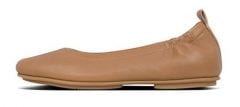 Ballet flats really are a type of footwear that are inspired from the shoes that ballet dancers dance in. These are footwear which are minimal in style and design much like the ballet shoes and have no design elements that do anything more than cover the foot. They don’t have a raised back heel and they also do not have any support characteristics in the arch. The minimal characteristics also means that they have to fit the feet snugly to stay on the feet. The structure will mean that they don’t really conflict with the way the feet functions or develops. There’s nothing inherently bad using these sorts of footwear and they’re fashionable. What goes on if you do need some kind of arch area support? There are numerous medical conditions in the feet where some sort of support below the foot is considered necessary. Quite often that is only required in the short term and other instances it would often be a long-term requirement. The sorts of issues that will benefit from shoes with increased support within them could be something such as fatigue in the feet and legs, especially in those who are on their feet throughout the […] read more
0 Views : 656